Tampa - love it or hate it, just don't censor it!

There are so many reasons we find ourselves either loving or hating a book, and these are things that are completely idiosyncratic to each of us.  That thing that makes a story or character resonate can be a combination of many things in the writing, but often it can truly seem an alchemy of intangibles that is hard to put your finger on.
Our reasons for reading any book in particular are even harder to pinpoint at times.  Surely, we don't read books to be constantly amused.  We, most of us, I would think, read to be amused, educated and sometimes challenged.
As a bookseller, reading is a necessity as well as a privilege.  But when I read, I always have my customers in mind, which means I have hundreds of people piggybacking my thoughts on every page.
I bring this up because of the book that has become persona non gratis in many Australian bookshops, to the extent that even the US and UK have reported on the controversy it has caused here.
Tampa, written by Alissa Nutting, is a book that quite a few people think you shouldn't read, and a book that select bookshops in Australia have decided to ban from their shelves.

Australian jacket
It is the story of Celeste, a 26 year old school teacher and paedophile.  The story follows her journey towards the successful seduction/abuse of two teenage boys in explicit and uncomfortable detail.
Celeste herself is an unashamed predator, whose predilection for young and inexperienced boys motivates her every action -  her marriage, vocation and appearance are all vehicles to get her closer to her victims.
There are some interesting questions raised not only by the subject matter of this book, but also in the way Alissa Nutting chose to write the book.
There is no comeuppance for Celeste, no boundaries and certainly no context provided for her actions.  The sex is written in titillating fashion, and it is abundant.  And of course, that is where the controversy surrounding this book stems from.
Alissa Nutting, the author, was inspired by a true story.  Her motives were to explore why society in general doesn't take the sexual abuse of boys by adult women as seriously as the opposite and why in so many cases such as that portrayed in Tampa, the adult women are seen as victims of sexual precocity in teenage boys.
The failure to recognise women as authors of their own desire is also common in literature.  The phenomenon of the best-selling 50 Shades of Grey, based on the sexual education/submission of a woman by the older and wiser Mr Grey, is a case in point.
US jacket
So whilst Celeste is disgusting, at least Alissa Nutting doesn't find romantic or convenient excuses to explain her rampant sexual appetite or suggest that she is a victim in any way.  Her deviance lay not in her desire for sex, but in the manner in which she procures and safeguards it.
It is the honesty of this book that makes it so equally compelling and confronting, and in my mind, it is not a book to be avoided, but one to be taken very seriously.

You don't have to read Tampa to know that you don't want to read Tampa.  Books are endeavours we take ourselves on - we inhabit lives for the duration of the story - and one can certainly understand why readers would be reticent to spend time inside Celeste's head.  However, the same can be said of  many other recent best-sellers, including The Slap, The Corrections and Notes on a Scandal.
Bookshops - particularly those that are petite like Potts Point Bookshop -  discriminate whenever choosing books they wish to promote and keep on their shelves.  In this case, booksellers who felt that their customers would not want to inhabit the world of Celeste could simply have chosen not to carry Tampa instead of dramatically "banning" it.
All the author would ask of you is that you don't give in to the idea that this is a sensationalist exercise simply due to it's parts.  All we would ask of you is that you look beyond the cover to find out more about the audacious talent of Alissa Nutting.
In the end, it is up to you.

More articles about Tampa
The Guardian
The Herald
Three Guys One Book

National Bookshop Day

Saturday August 10
Waiting for the excitement of National Bookshop Day!
"Outside of a dog, a book is man's best friend.  Inside of a dog it's too dark to read"  
Groucho Marx
Join us for a wonderful line-up of fun for all the family - including your dog!


Tim has worked with animals before.
From 
10am - 12pm, 
as you are browsing, Tim, photographer /bookseller/ all round good bloke, will take a photograph of your dog.
Or if your concerns run to the spiritual, read your dog's past, present, future at the Dog Tarot station.


Dr Mim and Claire
Also from 10am, meet Dr Miriam Meek and Claire Jenkins, who together have over 20 years experience in veterinary science.  These ladies have a stall at Kings Cross market and will be opening premises as The Potts Point Veterinary Hospital in Potts Point very soon!  
Dr Mim and Claire will be here to meet and greet the neighbours and you can look forward to some tasty doggy treats and a competition to win a complimentary consultation. They will be in attendance until 12pm.

At 2pm, Fairy Poppilina, our storytelling fairy, will transform herself into Furry Puppilina............

Furry Puppilina will transfix you all with the high jinx and hilarious antics of Hairy Maclary and his troublesome crew and other fun-loving dog stories.  Get ready for a unique storytime experience!

When all is said and done, National Bookshop Day is about inviting you into our bookshop - a well lit place outside of a dog - and to say thank you to our wonderful community!
Please join us for what promises to be a wonderful celebration!


Have you chosen your outfit for our (Wo)Man's Best Friend inspired National Bookshop Day?  Here's a few shots to get you thinking from the extraordinary Couture Dogs of New York.


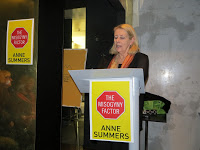
Anne Summers Event @ Yellow House Pop-Up

When we held our event with Anne Summers on June 25 at Yellow House Pop-Up, we knew some things.
We knew that misogyny and sexism were topics on everyone's list, that Anne Summers was the go-to woman on the topic, particularly after her landmark speeches in 2012 and sold-out sessions at the Sydney Writer's Festival.  We knew that Julia Gillard's struggles were proliferating the media and that our audience - made up of men and women - were in for a great night.

What we didn't know was that Anne Summers' remarks that rainy evening would be so incredibly prescient and that we would embark the next day on a new era of Australian politics.

"We thought that anti-discrimination would eradicate sexism."
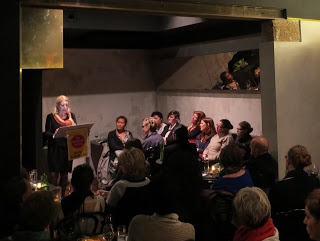
From the outset, it was a rallying to the ramparts.  A battle cry to women (and men) everywhere to get angry and to make their anger about the inequality they experience known.  And whilst that may sound confronting to some, the conversation that ensued after Anne delivered her speech was incredibly inclusive and supportive.

Anne's thought-provoking questions -why is it after 40 years, women are still paid less than men and that men still dominate the top ranks of leading organisations - her pointers to objectives - financial independence, fertility control, freedom from violence - indicators of success - inclusion, equality & respect - and viewpoints on equality - is equality a good idea? - were discussed in great length long into the night.

"Women are penalised at least $1 million dollars in their lifetime."
Anne talked passionately about her respect for female leaders and women in power, particularly Julia Gillard. She offered an interesting perspective on reverse sexism in the case of the cautionary tale that unfurled in Queensland politics, which saw some of our first women leaders ousted within a short period of time.  And her statistics were often breathtaking.

Question time was dominated by questions about leadership, politics and of Julia Gillard's knitting habits. Broader strokes dealing with disability and racism were also addressed.

"If Misogyny is the theory, sexism is the practice."
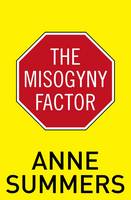
In an age where women are supposed to be able to "have it all", the emphasis on motherhood guilt that proliferates our media is generated by the Misogyny Factor.  In a world where women can "be" anything they want, companies who strive to keep women underpaid and unrewarded are using the Misogyny Factor.  In a country where women's "rights" were forged more than 40 years ago, the Misogyny Factor is still going strong.
How does equality between men and women work?  If you really want to know.....


Be kept up to date and subscribe to Anne Summers Reports, an online magazine about topics you probably won't have read about elsewhere.  The current issue features a special interview with former Prime Minister, Julia Gillard.


Interview with "World Tour" author, Francisca Matteoli

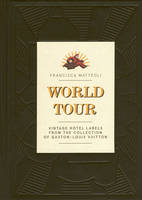
A couple of weeks ago we started off our Potts Point Pin-Ups, highlighting beautiful and inspiring books by showing you some interior pages.  One of those titles was World Tour: Vintage Hotel Labels from the Collection of Gaston-Louis Vuitton published by Abrams.
To our surprise the author of that very book, Francisca Matteoli, saw our blog and contacted us to thank us.  Francisca is an travel author, journalist, and blogger who lives in Paris.  Her previous book Escape:  Hotel Stories is  another gorgeous book highlighting the passion of travel.
Francisca answered some questions about her new book and about being an avid traveller.
Here's what she said to us.

PP: The Gaston-Louis Vuitton Hotel Label collection is the genesis of your book World Tour.  How did you gain access to the collection?
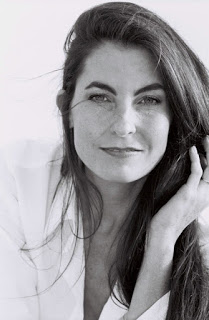
FM:  I was having lunch with Julien Guerrier, editorial director at Louis Vuitton, and I told him about my Chilean great-grandfather and my family who always lived in hotels, and about our life in Chile and France.  He then told me that Louis Vuitton had a magnificent collection of hotel labels and that we could connect our stories.  He knew I liked writing stories and we thought that it would be a very original way to talk about travel.  That is how it all began.

PP:  Much of the research about the origin, design and purpose of hotel labels in the book was done by you and not just sourced from the collection.  Did you approach the history from a design or travellers' point of view?

FM:  The traveller's point of view.  As all South Americans, I adore telling stories. And writing stories.  My favourite hotel labels bring back many personal memories such as the Hotel Gloria in Rio de Janeiro for example, because I lived in Rio and because it's situated in one of the most legendary cities of the world.  I also like very much the label of the Hotel Le Meurice in Paris because it epitomises for me French elegance of a city I love.  The label of The Grand Hotel d'Angkor is another of my favourites.  It's more a painting than a label.  I wanted to bring an emotion when you look at those labels that makes you think "I'd love to go there, to see that place".

PP:  Hotel labels have had many a renaissance in their design over the centuries.  How important do you think the hotel label is in leading design in other areas or do you think it was a follower?
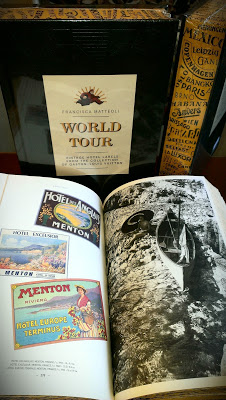
FM:  A lot of labels in the book are from a period characterized by optimism and peace in Europe.  When Paris was decadent and beautiful, with the building of the Eiffel Tower, the Opera Garnier, the Gare d'Orsay, the Grand Palais, the grand hotels.  There was a desire of new and extraordinary things.  In fact, hotel labels have accompanied all the important art periods and movements.

PP:  There are 21 stopovers in the book including destinations from Saint-Raphael to Monaco, Libya to Israel,  Mexico to Uruguay .  Are these based on real journeys people would have taken over the past couple of centuries?

FM:  Yes, absolutely.  I wanted to write real travel stories when travel was associated with comfort, luxury, adventure and mystery.  A time when people were proud to show the stickers on their suitcases, to discover new places and live adventures.  I remember when I came from Chile to France with my family we took a ship and did a travel that lasted 3 weeks - with our luggage, trunks and even some pieces of furniture.  It was not only a travel, but also an incredible adventure.  Strange, epic, tragic, crazy.  I wanted to feel all that again and make the readers feel those emotions too.

PP:  The combination of pictures, quotes and vintage labels collected together in World Tour is incredibly evocative and romantic.  Was that your intention?

FM:  Yes.  My family knew the golden age of travel, the steamer-trunks, the luxury liners, an age of elegance.  It was an age of hopes and dreams and of people settling into a new country.  A time when everything could arrive.

PP:  You have written for National Geographic and have also published other books about travel?  How did you come to be a travel writer and what is your favourite part about your job?

FM:  Well, I've always been surrounded by travellers.  And also by adventurers.  My Scottish mother and my Chilean father were also driven by an intense curiosity.  So like everyone I think, I have been influenced by my background and as I come from South America where everyone likes to tell stories, it was kind of natural for me to mix stories and travels.  I published some stories for magazines but I really started to write seriously after I went to Rwanda with the French Doctors and did a story for National Geographic.  I wanted very much to write something about this experience, so I went to see the editor of the magazine and asked him if he was interested in a story.  I had never written for such an important magazine before.  I knew that very few people had been to Rwanda in those conditions and had the opportunity to see the country from that angle, and I felt that it was going to be a once in a lifetime experience.  The editor of National Geographic said he was interested in a story, he asked a photographer from Magnum agency to join me, and that is how I started writing real travel stories.  That was my first real work as a travel writer.
My favourite part about my job is the fact that I have the chance to see life from so many different angles.  Life is a kaleidoscope.  We never get to see all the colours or all the sides because they are changing all the time and we are changing too.  But it's so exciting to try to catch the most of it, no?  One of my biggest reward as a travel writer is being able to change the false impression that somebody has on a country and people.

PP:  Who do you think will be interested in reading World Tour?

FM:  Everybody!  People of all ages and all kinds who want to travel or to dream, to live adventures, to see unexpected things; beautiful, moving, funny, special, to read stories which make us love the world where we live.

Author Interview with Inga Simpson, author of "Mr Wigg"

Mr Wigg is a truly wonderful Australian novel due for release later this month.  It is filled with the stuff of rural life and routine, and yet it is suffused with great warmth.  The gentleness of Mr Wigg himself permeates every page making this a memorable must-read.

We asked the author, Inga Simpson, some questions about Mr Wigg.  Take a look.


PP: I laughed when I read that you thought Peter Cundall (of Gardening Australia) would make an excellent Mr Wigg should a movie be made of your book.  I can see it too! Was there anybody in particular who inspired you to write this wonderful character?
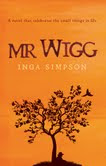
IS:  To an extent, my paternal grandfather.  He grew magnificent peaches!  White ones especially, which I've never tasted the like of since.  Wigg is the family name of one of his French ancestors, which really stuck in my head.  When I travelled to rural France and saw the way people live - with their village plots and walled orchards, and so much emphasis on growing and cooking and sharing food - I wondered if my grandfather had been living out of that part of his genetic heritage without having ever been to France.  A character began to take shape, and I was calling the novel Mr Wigg long before I started writing.  Mr Wigg took on his own character as the book evolved - one quite a way from my own grandfather - but some of Mr Wigg's stories about the old days are borrowed from my family.

PP:  Whilst Mr Wigg is an intrinsically Australian novel, we find ourselves dipping into European folklore in some parts.  Where did the story of the Peach King, the Orchard Queen, her gardener and his daughter come from?

IS:  I've read plenty of fairy tales (and reworked fairy tales) and love high fantasy - so it's a natural place for my imagination to wander.  The fairy tale came late in the writing of the first draft, so I already had Mr Wigg's fruit trees' voices and the main elements of the story.  The Peach King appeared in a passage about a peach orchard that Mr Wigg had dreamt up, and the rest almost wrote itself, echoing aspects of the plot, especially Mr Wigg's relationship with his daughter.  I wanted to suggest that European lineage, as you suggest; Mr Wigg's alternate self, perhaps.

PP:  The novel is set in the 1970s and there are some interesting references, such as the Vietnam War and the boycotting of South Africa by the Australian cricket team.  Why did you chose to set the novel in this period in particular?

IS:  Well, that's as far back as I can draw on my own experience, avoiding the need for too much research.  It was also - or so it seems to me - a time of great change for farming, cricket, politics, and the rural Australian way of life.  I was interested in the idea of change, and really wanted to celebrate some things about that period that are now gone.  The reason I ended up beginning with the summer of 1970/71 was all about the opportunities presented by (relatively) dramatic events in the cricket when England toured for the Ashes that season.

PP:  The characters in your book range from very young to old, ocker to foreign.  Did you find it difficult to find any of their voices, particularly that of the elderly Mr Wigg?

IS:  Mr Wigg and the children were probably easiest - certainly the most fun.  At first I had to concentrate a bit on writing from the point of view of an older man, and brought in the cricket to help me try and get his voice, but once I put him in the room with his grandchildren, I had it.  The vernacular of that time and place - and of people his age - is one I know well.

PP:  In 2011 you took part in the Queensland Writer's Centre/Hachette Manuscript Development Program, which lead to Hachette Australia publishing your book.  How invaluable was that experience?

IS:  It was a wonderful experience.  The opportunity to receive feedback on my work face-to-face from a publisher, and current information about the publishing industry from those who know best was, as you suggest, invaluable.  The ongoing support and friendship of the other writers who participated that year has been fantastic as well - developing those peer support groups is so important for writers.
Hachette contracting Mr Wigg as a result was a bonus, and a dream come true.  It didn't happen immediately, though, and was very much a collaborative effort.  I had to go away and rework the manuscript in response to the feedback I received and resubmit the novel.
A high proportion of participants have gone on to be published; I really recommend applying for the program to anyone with a draft manuscript.

PP:  And now, you are the owner of Olvar Wood, a retreat run by writers for writers, which holds masterclasses and workshops in Queensland.  Can you tell us a little about that?

IS:  Olvar Wood has been a really rewarding experience.  We wanted to share a beautiful part of the world - the Sunshine Coast hinterland - with other writers, and try to fill what we saw as a bit of a gap between what writer's centres and universities can offer.  We are great believers in the mentorship model; working on a manuscript over a period of time with personal support from someone more experienced - a bit like an apprenticeship.  We have met so many wonderful writers, some of whom have become good friends - and many of whom have gone on to be published.
Running the retreat didn't leave much room for our own writing.  At the moment, I do some nature writing workshops for government, and focus on one-on-one mentorships, with the option of  residential support at the lovely B&B down the road.  That way one someone else cooks the writer breakfast while I'm at my own desk - where I need to be.

PP:  Are you working on anything new at the moment?

IS:  I'm working on a new novel, set where I live, in the Sunshine Coast hinterland.  It's about a wildlife artist returning to the area where she grew up, and the impacts on a community of a child going missing.

Mr Wigg due for release 25 June $26.99