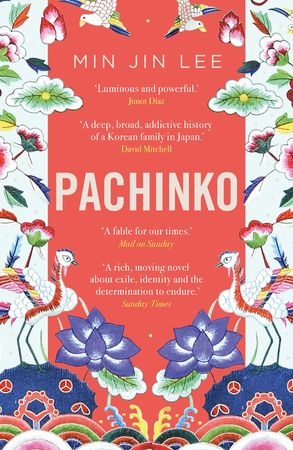
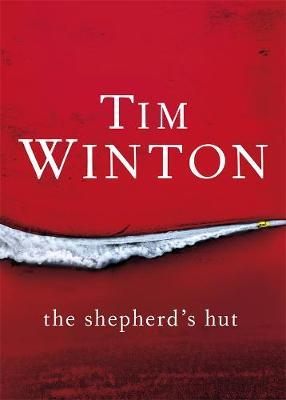
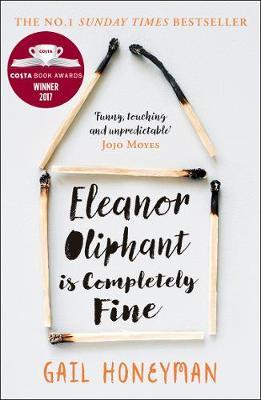
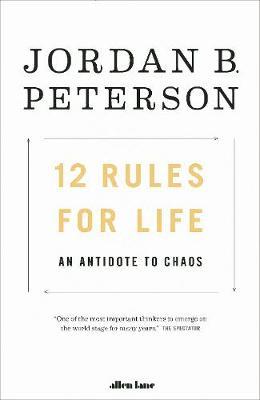

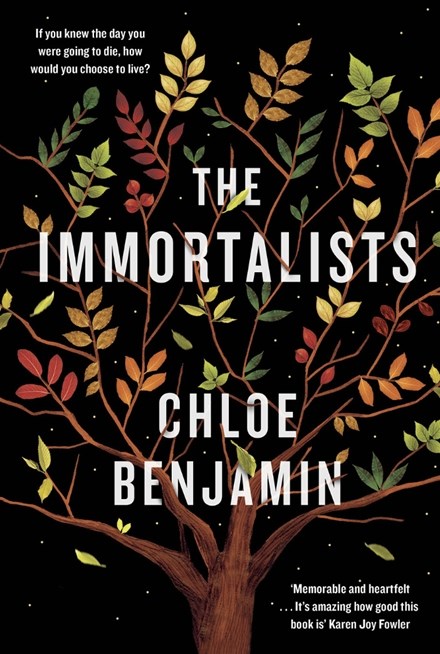


Our bestselling books of last week include Tim Winton's powerful new novel The Shepherd’s Hut, staff favourite Pachinko by Min Jin Lee, Chloe Benjamin's delectable The Immortalists, and Jordan Peterson's humorous, surprising and informative 12 Rules for Life.

Almost Love follows a young woman named Sarah who falls in love fast — and hard — for a man twenty years her senior, and starts sacrificing her career, friendships, and relationships to be with him.
We have all been there, or witnessed it: a relationship destined for failure from the very start. The writing is on the wall; sometimes we’re the friend who knows this, but can’t — for the sake of the friendship — reveal our concern — and most of us have been the protagonist, invested in a romantic relationship going nowhere, certainly not the direction we want it to, but hopeful — so damn hopeful! — that our inner fears won’t be realised, that our gut instinct is wrong. We know from the very start that Sarah’s relationship with Matthew is fated to end badly, but we know what it’s like, to be in love, to think we’ve found the person who gets us, who appreciates us; or been so blinded by our own desires, our fantasy of What Could Be, that we overlook our partner’s failings. Hope overrides reality; the belief that we can change things, set a new path. Sarah is all of us, and bearing witness to her razing of everything meaningful in her life, and the erosion of her confidence, is truly agonising. There is humour throughout, certainly; but it’s the gallows kind, that only exacerbates the splintering of our hearts as Sarah’s journey unfolds.
Wry and devastating in equal measure, Almost Love is a delectable and heartbreaking tale about an all-consuming relationship gone wrong, and demonstrates how treacherous, agonising and addictive love can be; how love can be an exercise in self-sabotage, and falling for the wrong person is often akin to hitting the self-destruct button. O’Neill navigates the jagged edges of love so astutely. I loved it.

Jonathan Moore’s frightening near-future thriller The Night Market is a thought-provoking noirish crime novel set in a gorgeously realised subtly-futuristic, overwhelmingly dystopian version of San Francisco, where copper thieves run rampant, drones buzz above the heads of the city’s citizens, and ostentatious consumer consumption runs riot. Think of a Michael Connelly Harry Bosch novel set in a Blade Runner-esque world.
When a man is found dead — his corpse in a terrifying state of decay — in one of the city’s luxury homes, SFPD Homicide detective Ross Carver and his partner are called to the scene to lead the investigation. But before they’re able to get beyond a cursory glance at the victim, six FBI agents — or are they? —burst in and forcibly remove them from the premises. The detectives are hastened into a disinfectant chamber, sprayed with a metallic-tasting liquid, then rendered unconscious. When Carver wakes two days later in his apartment, he has no memory of the events that occurred; but his mysterious neighbour, Mia, is strangely determined to help Carver remember.
The Night Market steadily ramps up its revelations, and it gradually becomes clear there are larger forces at play. Moore resists the temptation to have Carver follow breadcrumbs into the darkest corners of his incredibly-imagined world, keeping the narrative tight and focused. Moore’s latest novel — the first of his I’ve read, but surely not the last — is a tense, gritty thriller, and near-perfect in its overall execution, with an ending that lingers well past the final page. Seriously, this is a book that nails its finale; it’s pitch-perfect and haunting. It’s one of my favourite thrillers of the year so far.

A.J. Finn's compulsive domestic noir thriller The Woman in the Window reigned supreme last week, while staff favourites Eleanor Oliphant Is Completely Fine, The Immortalists and Pachinko maintained their place in the top 5.

Our staff favourite The Immortalists tops our bestseller list this month, which is the kind of brilliant novel that swallows you whole and forces you to live in its world even when you’re not turning its pages. A.J. Finn's The Woman in the Window — a Hitchcockian brand of domestic noir whose pacing will force you to reexamine our casual use of the word compulsive — is our highest-ranking crime novel. Meanwhile, Michael Wolff's controversial look inside the Trump White House remains lodged in the Top 10.

In Dervla McTiernan’s debut The Ruin, an elaborate plot and vivid setting serves as mere backdrop for showcasing her greater talent: creating unforgettable, emotionally textured characters, DI Cormac Reilly chief among them, and putting them through the emotional wringer. When you think of The Ruin, think fast, furiously-paced crime solving laced with social implications that are as frightening as any chase or shootout ever put to paper. McTiernan has set the pace for every other crime writer this year.
The book opens twenty years in the past when, on his first week on the job, young Garda Cormac Reilly is called to a dilapidated country house. There he finds two neglected children, fifteen-year-old Maude and five-year-old Jack. Upstairs, their mother Hilaria lies dead as a result of a heroin overdose. Jack is pushed into foster care, Maude disappears, and Reilly moves on; up the career ladder and eventually away from Galway to Dublin.
Presently Reilly is back in the town he thought he’d forgotten, assigned to working cold cases at a new police station which is populated by some suspicious characters, who are more than willing to make their resentment of him known. When Jack is discovered dead as the result of a suicide at the same time Maude returns from decades away, Reilly is encouraged to delve back into the case that’s haunted him in the intervening years, tasked with finding a link between Hilaria’s death and her son’s.
This is a story of human frailties, violence and betrayal; of accepting the consequences of choices made, and managing their ripples in the future. McTiernan’s debut is assured, elegantly crafted and utterly compelling. DI Cormac Reilly’s second case can’t come soon enough.

With The Woman in the Window, A.J. Finn has concocted a Hitchcockian brand of domestic noir whose pacing forces us to reexamine our casual use of the word compulsive. Finn has put the rest of the thriller-writing world on notice: he’s going to be around for a while.
It has been ten months since the title character, Anna Fox, last left her home. She lives alone in an expensive family home in uptown Manhattan, whiling away the hours by gazing through her window, spying on her neighbours, watching old black-and-white movies, playing chess, and chatting on an online forum. A glass of merlot is usually never too far from her hand as she goes about these pursuits. In fact, drinking wine should really be considered an activity of its own; so, too, her casual pill-popping of her many prescribed drugs.
Anna is not a recluse by choice. She is agoraphobic — a ruthless anxiety disorder — as a result of a traumatic event in her not-too-distant past. As a child psychologist, she recognises her symptoms, knows how debilitating they are; but she is powerless to overcome her own personal psychosis. Her heavy consumption of alcohol inoculates Anna from dealing with her reality; separated from her husband and daughter, a ghost anchored in the land of the living.
Her sedate daily routine is interrupted when the Russell family move in next door: Paul and Jane, and their son Ethan. Anna forms an immediate and unlikely comradeship with the teenage boy, who seems like he needs a friend as he exposes his father’s violent tendencies. Jane, who also visits, is more obscure in her observations of Paul, but Anna still gets the sense this is a family on tenterhooks. Her worst fears are confirmed when, through her binoculars, she witnesses what she perceives to be an act of violence. The police’s investigation is perfunctory at best, Anna the very definition of an unreliable witness; so she continues to gaze upon the Russell house, desperate to prove what she saw while imprisoned in her own home.
The Woman in the Window literally interrupted my professional and personal life. Once in, I simply had to stay in, and stick with it to the end. Finn’s debut is a supercharged domestic noir in the tradition of Paula Hawkin’s The Girl on the Train, Renee Knight’s Disclaimer and, of course, Gillian Flynn’s Gone Girl. The elegant prose and its blistering pace keep the heart of the novel beating even when some revelations prove predictable. The book never strays too far from convention, but its pedal-to-the-floor narrative drive propels it above and beyond its kin. I couldn’t turn the pages fast enough.
OPENING HOURS:
Monday - Saturday: 9am - 6pm
Sunday: 10am - 5pm
Public Holidays: 10am - 4pm
14 Macleay Street, Potts Point, Sydney.
Phone: +61 2 9331 6642
Fax: +61 2 9331 573
Email: shop@pottspointbookshop.com.au