
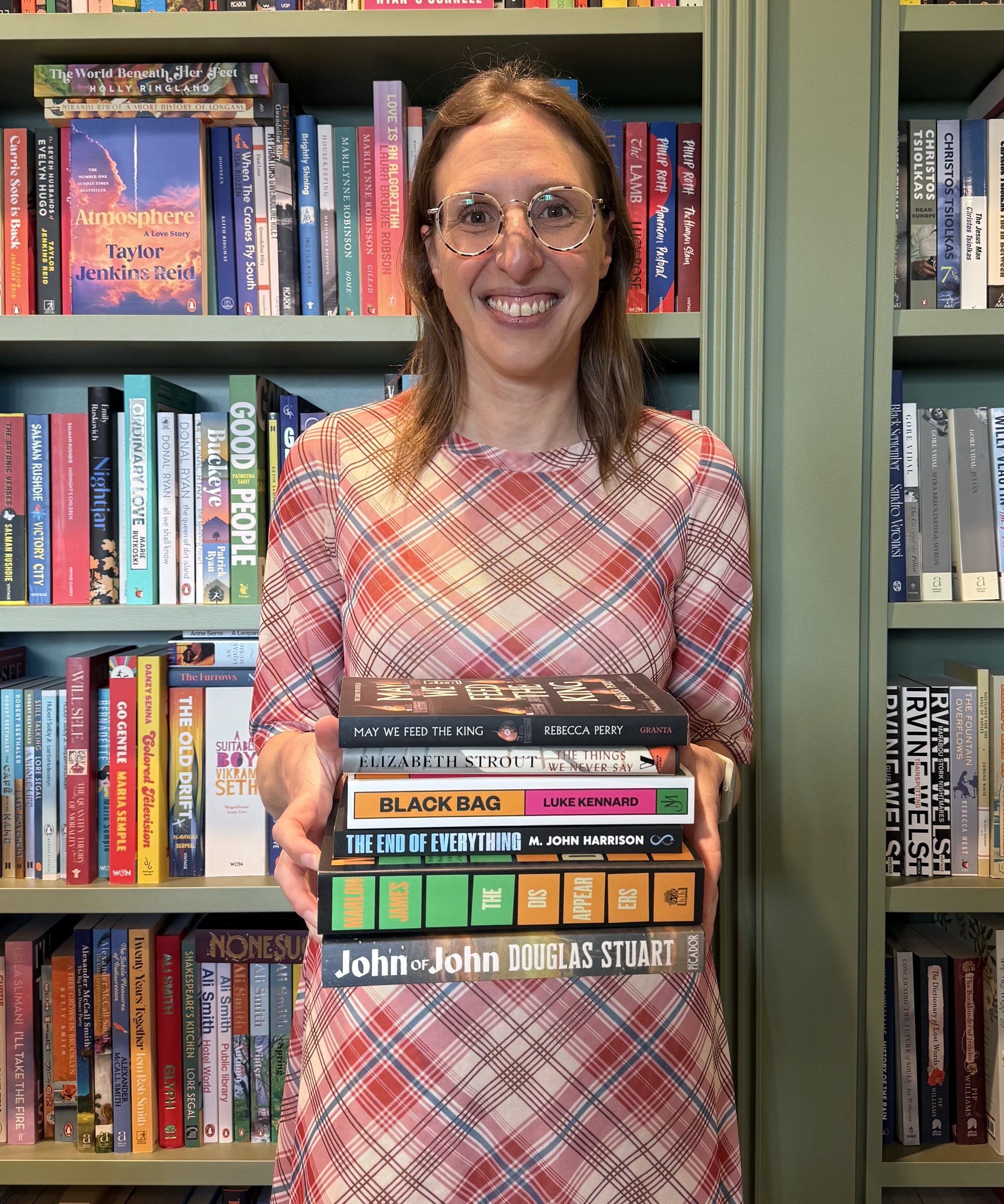
With less than two weeks to go until the announcement of the Booker Prize winner for 2026, @kateisreading is back with her opinions on the shortlist.
Can you believe it’s that magical time of year when bookish snobs all join together to have opinions on an arbitrary shortlist? It’s better than Christmas, really. This year’s selection has some excellent books, and the thing I appreciated about the shortlist and the longlist is that these novelists are all grappling with big, modern themes of how to be alive and be a person. These writers do not flinch in the face of complexity or the general sense of empty dystopian bleakness that seems to be blinking in and out of focus in this era of advancing technology and regressive politics. That being said, I think four of the six books on this list are remarkable and timeless, whereas the other two were thought-provoking but without really capturing my heart or my imagination. I will leave it to you to guess which is which. No predictions for a winner from me; it’s too humiliating to try and guess what a committee will agree on. I’ll leave it with Dame Mary Beard and her posse of literati.
Happy Booker season to all and to all a good night,
Kate
The Disappearers by Marlon James
In three words: Graphic. Maximalist. Jamaican.
For readers who: Can handle a polyphonic onslaught of sex, violence and cultural references
On one hand: It’s the talk of the town
On the other: It’s a LOT
Black Bag by Luke Kennard
In three words: So damn funny
For readers who: Seek creative solutions to the existential crisis of modernity
On one hand: iI’s about a man who becomes a bag
On the other: It’s quietly profound
May We Feed the King by Rebecca Perry
In three words: A castle’s secrets
For readers who: Are intrigued by the nuances of hyper-realistic fake food
On one hand: It’s a commentary on how history is crafted
On the other: It’s about one person, grieving
The End of Everything by M. John Harrison
In three words: An apocalypse, maybe
For readers who: Aren’t too attached to exposition as a prerequisite for narrative enjoyment
On one hand: It’s beautifully restrained, surreal and at times, shocking
On the other: It’s seriously confusing
John of John by Douglas Stuart
In three words: Tweed is life
For readers who: Can’t get enough of complicated Scottish families who live trapped together on remote islands
On one hand: It’s superb
On the other: It’s really superb
The Things We Never Say by Elizabeth Strout
In three words: Dealing with despair
For readers who: Feel deeply, think about things, and are still working out how to be in this worrying world of ours
On one hand: Strout has never won the Booker
On the other: Don’t sleep on Strout